Friday, November 13, 2026
Issue #2 · 6 min read

Welcome to Issue #2 of Minimap. This week answered the question the betting ban left hanging: who survives without that money? In 48 hours, two organizations shrank their CS2 operations; at the other end of the spectrum, a broadcast became a sales channel. On to the map.

In today's edition
🏷️ The sticker peeled off: Fluxo pauses CS2 and Bounty Hunters benches its roster in 48 hours
🛒 Neymar's QR: FURIA turned a broadcast into a storefront
⚖️ Extra time for the ban: betting limbo runs through March 2027
⚡ Quick takes: FURIA's historic 13-0, betting stickers under watch, sponsor-free in Japan and Kings Cup on Monday
📊 Exclusive data: 57.3% approve the betting ban, including people who used to bet
Quick Takes
Sticker watch: Valve barred betting names and logos from the stickers of five betting-affiliated orgs at the PGL Major Singapore (November 24 to December 13), including Brazil's Imperial, which already had to swap in Austin. While the MP zeroes betting ads in Brazil, the publisher itself filters betting brands on the game's biggest stage Sponsor-free: Japan's Crazy Raccoon ended a five-year deal with PC retailer GALLERIA without replacing the sponsor: revenue now comes from its own Shibuya store and media properties built since 2018. In the week of Fluxo and the Drop House, Tokyo showed the finish line
The sticker peeled off: Fluxo pauses, Bounty benches and the middle of the table pays the bill
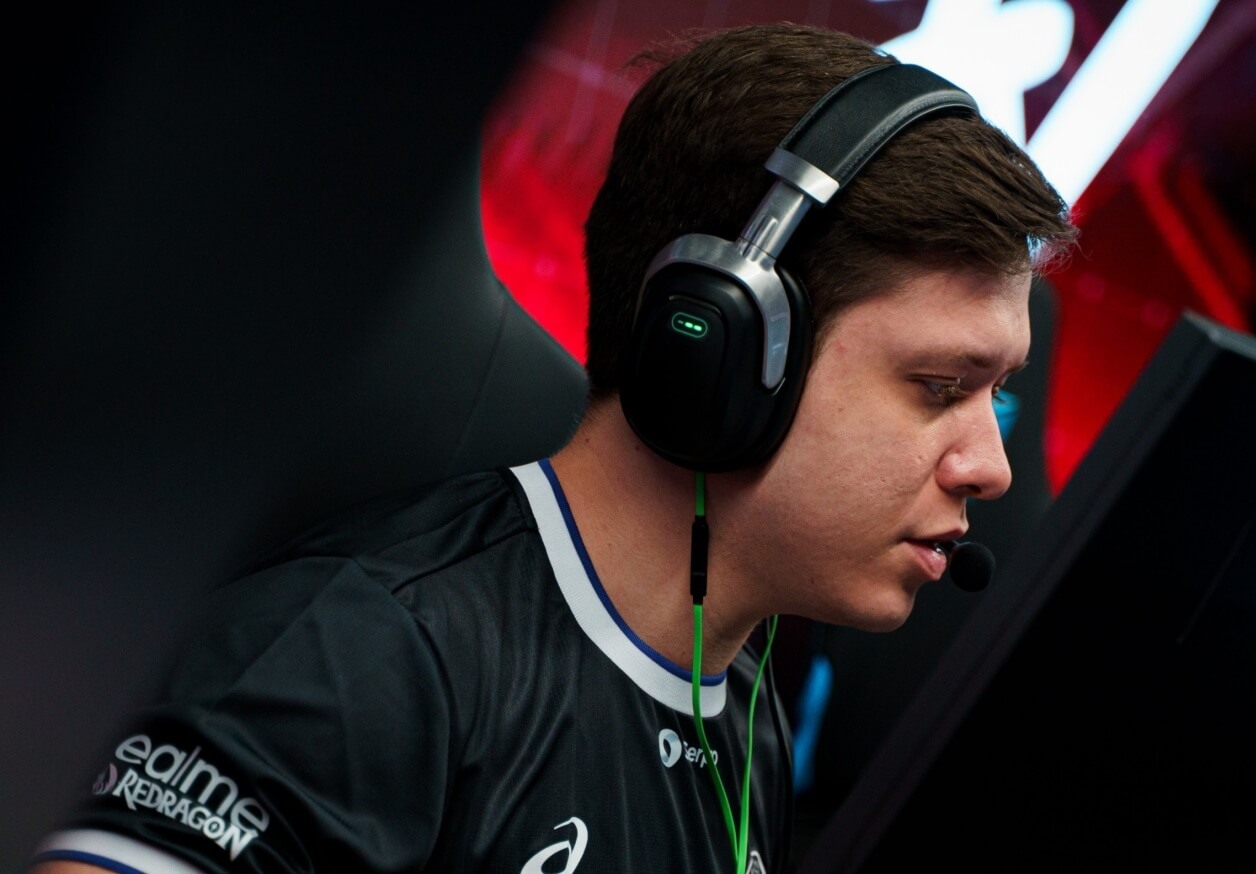
Fluxo W7M players in action in Counter-Strike
Image: DRAFT5
In 48 hours, the middle of Brazil's CS table shrank. On Tuesday (November 10), Fluxo W7M announced a pause in its Counter-Strike investment, keeping only exit, dav1deuS and coach Juve under contract. The statement cites changes to the Major model and the departure of a "fundamental strategic partner", the betting brand Lottu according to The Esports Radar, pushed out by Provisional Measure 1.394. A day later, Bounty Hunters, a rising club from the state of Minas Gerais, benched its entire roster while promising a "new chapter".
The backdrop is the shrunken payout. An HLTV tally shows a drop of up to 80% in team digital-sticker revenue between Major cycles, from about US$ 600,000 to US$ 120,000. For a mid-size organization, that sticker paid for the whole year. The MP removed the betting sponsor and Valve cut the qualification bonus in the same window; whoever missed Singapore lost both lines at once. Fluxo, with three Majors on its resume, is Brazil's first declared casualty of the combination.
The sticker that paid a mid-size team's whole year peeled off in the same week the betting sponsor left.
Why it matters: the week set the new entry price for Brazilian CS: a mid-size org is now an asset held hostage by a regulator and a publisher. For brands, the math flips: the space left by betting stays open with less competition, because a surviving org needs its own revenue. And a roster-continuity clause just became a diligence item.
Read the full coverage on DRAFT5 (in Portuguese)

Neymar's QR: FURIA wired the broadcast to the shopping cart
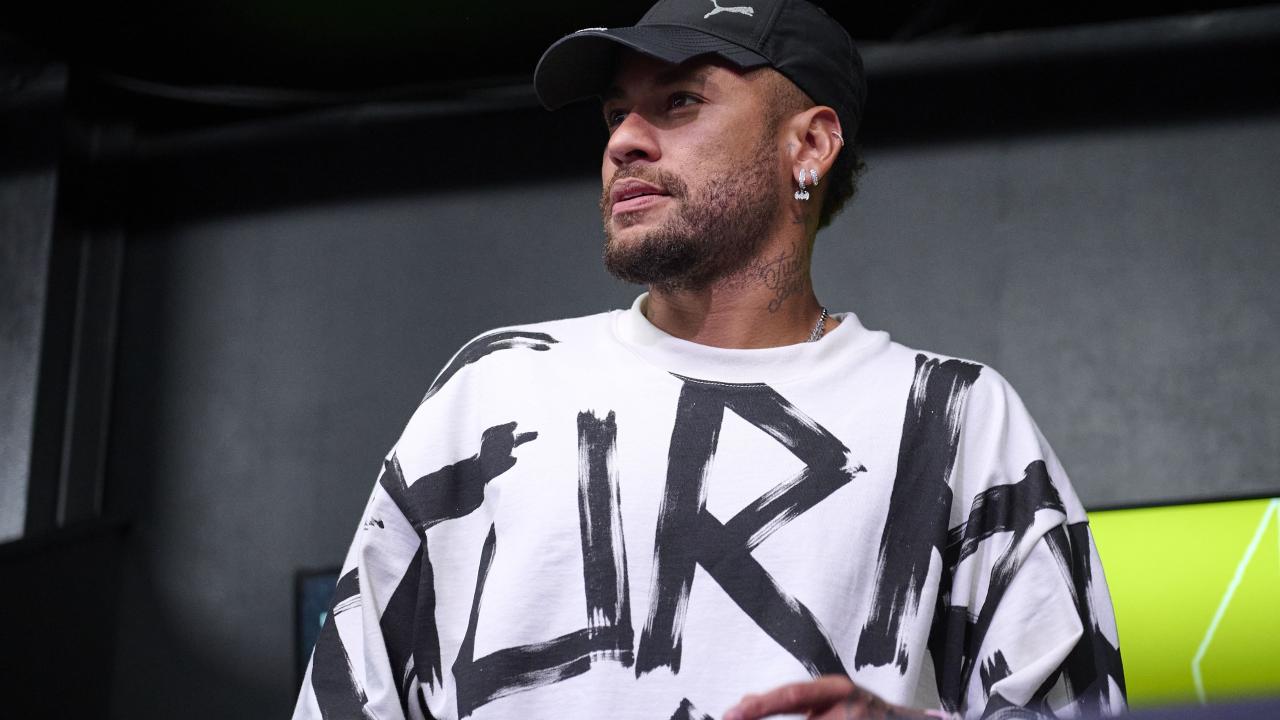
Neymar wearing a FURIA Collections piece at the Kings Cup Brazil
Image: Itatiaia Esports
In the same week rivals shrink for lack of a sponsor, FURIA debuted a format that treats the broadcast as a store. In the Drop House, launched Monday (November 10), Neymar, co-president of Furia FC, shows up at the Kings Cup wearing an unreleased piece. A QR code on screen takes viewers to the FURIA Collections store, and sales close at 11:59 p.m. the next day, never to return. The debut shirt sells for R$ 339, a boxy fit produced by JFR Lab, a São Paulo streetwear factory.
Each round brings a new numbered piece, and the match MVP receives one live from co-president Cris Guedes. The debut came in a 7-3 win over Dibrados, the same night Neymar missed a left-footed penalty that ran all over Brazilian sports coverage. It is the org's lifestyle arm, the one behind collabs with Champion and New Era (Esports Radar context).
The viewer now buys the piece without leaving the broadcast.
Why it matters: this is the counter-narrative of the previous section. Fluxo stopped because it depended on third-party money; FURIA sells on top of its own audience. For brands, two practical lessons: a broadcast slot can now close a sale, and drop mechanics (scarcity with a deadline, imported from fashion) already have infrastructure in Brazil. The honest caveat: the model calls for a Neymar on the roster, and few properties have one.
Extra time for the ban: 60 more days of limbo through March
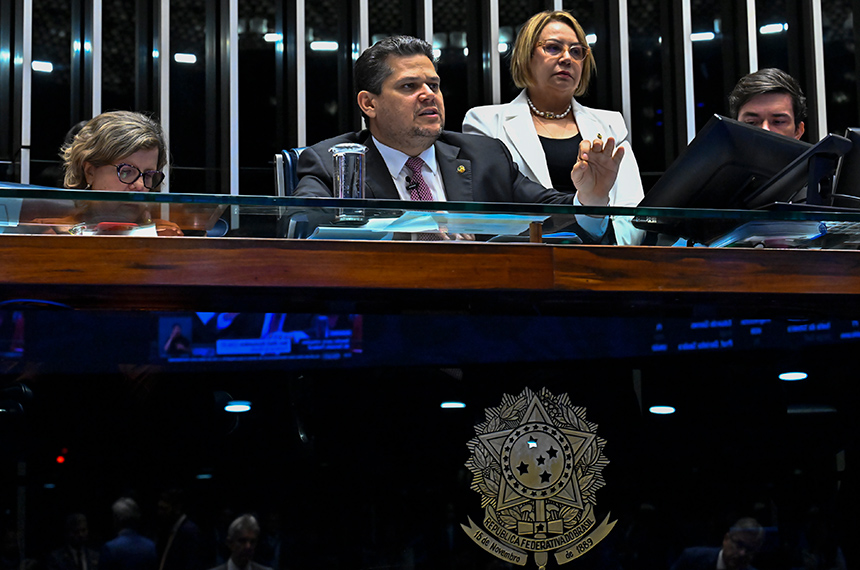
Brazilian Senate floor during a deliberative session
Image: Agência Senado
Provisional Measure 1.394, a presidential measure with force of law that bans fixed-odds betting and its advertising in Brazil, got 60 more days in force by act of Congress president Davi Alcolumbre (Act No. 118, published November 11). Because the congressional recess does not count toward the clock, the ban stays in force until March 4, 2027; without the extension, the text would have lapsed on November 23. The joint committee meant to review it still has not been seated, even after the amendment window closed with 99 proposals filed, several trying to reopen room for betting.
At the Supreme Federal Court, Justice Luiz Fux this week suspended every case challenging the measure, at the request of Prosecutor-General Paulo Gonet. The result: Congress without a committee, the courts on pause and the ban fully in force. If nobody votes by March, the measure lapses, betting returns to legality by default and the newly elected Congress inherits the problem.
Nobody knows whether betting comes back, and first-half 2027 sponsorship is already on sale.
Looking ahead: the answer can come three ways (a floor vote, expiry or the court), and the first-half sponsorship contract is being signed now. Sellers price the conservative scenario, with no betting money. Buyers use the uncertainty at the table, and anyone holding a betting-return clause got an option for free. The cost of limbo already showed up in section 1: each month of it costs a mid-size operation.
Gamers Club take
The same math dismantled two CS2 rosters in 48 hours: betting sponsorship leaving by decision of Brasília, and Major sticker payouts shrinking by decision of Valve. What replaces that money is owned revenue, and the week showed the format: FURIA selling numbered pieces by QR code inside its own broadcast, and a Japanese organization declaring it no longer needs a sponsor. This issue's data point closes the argument: 57.3% of the base approves the ban, including 44.3% of those who used to bet. And even though 74.8% of former bettors say they would return if the rule fell, the answer only comes in March, too late for those who already folded. The audience stayed; the bill changed hands. GC operates inside this scenario: a sponsored league and in-game media on a base of 3 million users the platform itself measures, with product revenue sustaining the operation under any regulatory outcome.
The audience stayed; the bill changed hands.
Gamers Club designs events, watch parties and activations for brands on a base of 3 million users.
Talk to GC
Gamers Club translator
The sticker that paid for the whole year: the Major sticker economy
A sticker is a digital decal carrying a team's brand, sold inside Counter-Strike during the Major, the game's world championship. Fans buy capsules to decorate their weapons, and Valve splits the revenue with the qualified organizations. For a mid-size org, that payout was the cash flow that funded the entire year. Qualifying for the Major was, in practice, a business model. The problem is that Valve changes the economics whenever it wants. According to an HLTV tally, the per-team payout reportedly fell from about US$ 600,000 to around US$ 120,000 between Major cycles, a drop of up to 80%. Without the sticker and without the betting money, the full roster no longer fits the spreadsheet.
Without the sticker and without the betting money, the full roster no longer fits the spreadsheet.
Exclusive GC data
57.3%
The ban has support even from people who used to bet. In the GC H2-2026 Interest Survey, 57.3% of the base approved the government's measures against fixed-odds betting and its advertising. Among those who bet before the rule, 44.3% approve the ban and 74.8% would return if it fell. Among those who never bet, only 8.3% would start.
Demand was suppressed, not created, and the regulation has the backing of the audience itself.
Source: GC H2-2026 Interest Survey (merged base, N=4,628; former bettors n=1,834, non-bettors n=2,794), internal data.

March is the new date on the calendar. If the measure falls without a vote, betting returns by default. Whoever already treats their own broadcast as a sales channel gets there less dependent. Until the next round.

Forward Minimap to whoever decides where the sponsorship budget works.

Issue poll
Do you approve of the government measures that ban betting and its advertising in Brazil?
Yes   No