Tuesday, September 29, 2026
Issue #1 · 8 min read

Esports this week put a price on trust, and charged both sides of the table.

A Real Madrid goalkeeper invested in the company that owns Astralis, betting the turnaround has become an asset. A traditional Korean football club decided not to proceed with its PUBG activation after the sanctions were already out. A bookmaker now has two CS2 teams carrying its own name. And an organization lifted a world championship trophy in a game where it does not even operate a team.

Along the way, the number that measures what matters to buyers: in an unpublished Gamers Club survey of 4,234 respondents, 56.5% said they remembered seeing peripheral brands sponsoring the scene.

Minimap's first official edition. On to this week's map.

Quick takes
Wagering: WONDR NATION and EWAGERS team up to bring skill-based esports wagering solutions to gaming operators. The deal was announced at G2E 2026 in Las Vegas and targets regulated markets. India-Japan corridor: JetSynthesys signs an MoU with MIXI to collaborate on games, marketing and esports, with possible strategic investments between the Indian and the Japanese companies. Franchise slot: Team Heretics applied to the RLCS partner program and is eyeing a European roster for November's Club Championship, per Sheep Esports sources. New product: Pokémon announces Team Masters, the first official trios TCG tournament. It debuts with roughly 670 teams at Seoul's KINTEX in Jan/2027, with free entry and Worlds 2027 slots. IP and culture: the Worlds 2026 anthem drops as "Presented by True Damage", reviving Riot's virtual group. It was the most engaged post on r/leagueoflegends this week.
In today's issue
🧤 Astralis just signed a goalkeeper, but he won't be defending any bombsites
⚖️ Krafton banned the cheaters. The partners banned Krafton
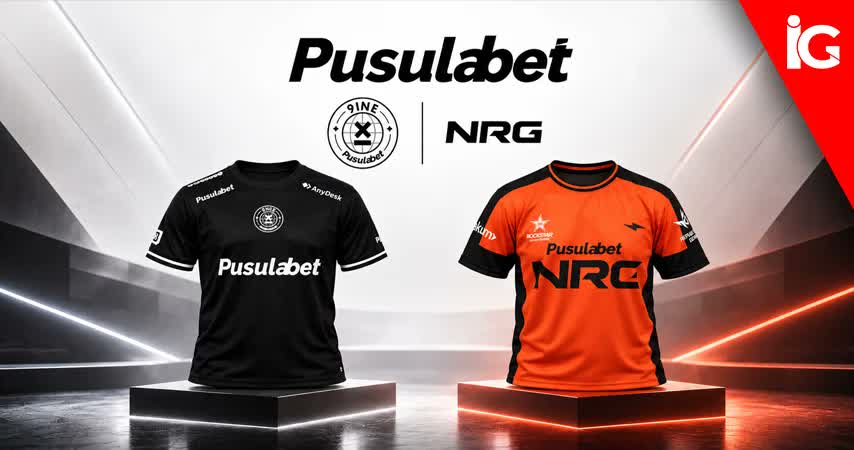
🎰 Pusulabet doubled down: two CS2 teams carrying the same name
🏆 Fortnite champions without touching the mouse: the "by" that won a world title
🗺️ Gamers Club translator: what the "X by Y" model is
Astralis just signed a goalkeeper, but he won't be defending any bombsites
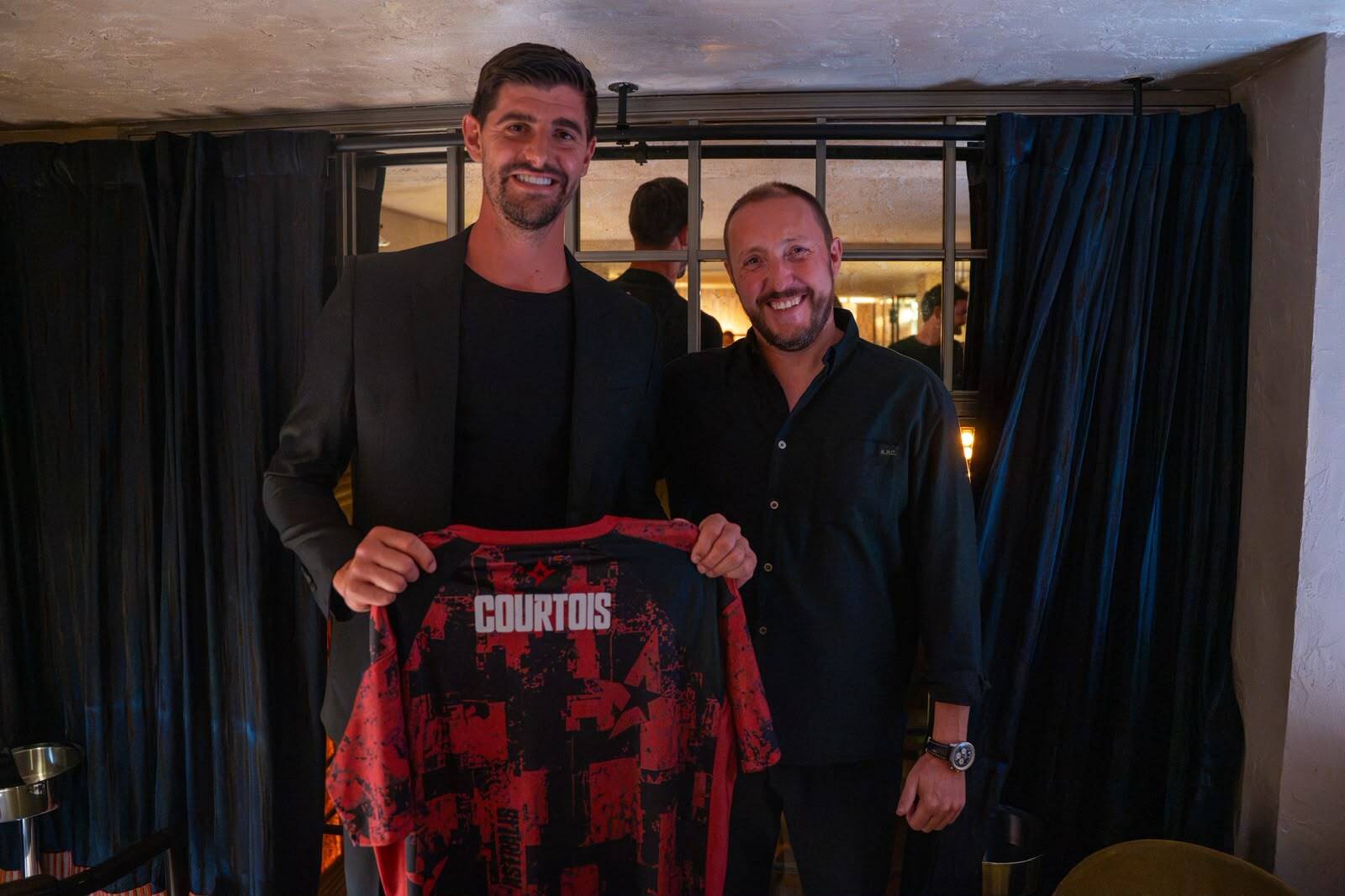
Thibaut Courtois, Real Madrid goalkeeper, becomes an investor in Astralis' owner
Image: Insider Gaming
Announced today (9/29): Thibaut Courtois, Real Madrid goalkeeper and two-time Champions League winner, has become an investor in Fusion Esports Group, the Danish consortium that owns Astralis. The investment comes through NXTPLAY, the vehicle he co-founded with CEO Gonzalo Vila, and marks the group's first position in esports. (Insider Gaming, 9/29 / Marca)
Astralis is one more brick in a portfolio that already spans football (KRC Genk, Le Mans FC, CD Extremadura), electric boat racing (Sierra Racing Club, in the E1 Series) and brands outside sports like Oakberry and STAMP. In early September, NXTPLAY had already entered gaming through PlayVault. (pley.gg / Palco23)
The context is an asset in recovery. Fusion bought Astralis in Sep/2025, after June/2025 reporting exposed the previous owner's financial situation. Since then, the group led by CEO Jonas "calc" Gundersen and CRO Jakob Lund Kristensen has closed sponsorships with Stake, Zero1Gaming and Bazoom. Astralis remains the winningest brand in CS, with 4 Majors, and currently sits 11th in the HLTV global ranking. (HLTV / pley.gg)
Gundersen called Courtois' arrival a "no-brainer" and said he is "much more than an investor, he's a genuine fan of what we do". Courtois, in turn, said he has followed Astralis for years because of the culture and the community around the team. (Berlingske / pley.gg)
"He is much more than an investor, he is a genuine fan of what we do," said CEO Jonas Gundersen on Courtois joining the group that owns Astralis.
🧤 Courtois invests in Fusion, the owner of Astralis, via NXTPLAY; not a direct purchase of the org
⚽ Multi-property portfolio: KRC Genk, Le Mans, Extremadura, E1 Series and PlayVault in gaming
🏆 Astralis has 4 Majors, the winningest brand in CS, and ranks 11th on HLTV
💰 Turnaround underway: Stake, Zero1Gaming and Bazoom closed since the org's Sep/2025 purchase
Elite athlete capital comes in as equity, not season sponsorship: long horizon and a multi-property package that already spans football, electric boat racing and gaming. For Astralis, the deal says the turnaround has become an investment thesis, not just a survival plan. For brands, a global football name on the cap table opens activation surfaces a jersey cannot deliver: crossover content, mainstream audience and credibility outside the niche. And it is one more chapter of the thesis the pilot series opened with Complexity: Astralis went public in 2020, delisted in 2023, nearly collapsed in 2025 and now attracts celebrity capital. IP does not die, it changes hands.
Sources: Insider Gaming · Marca · pley.gg · Palco23 · Berlingske · HLTV
Krafton banned the cheaters. The partners banned Krafton
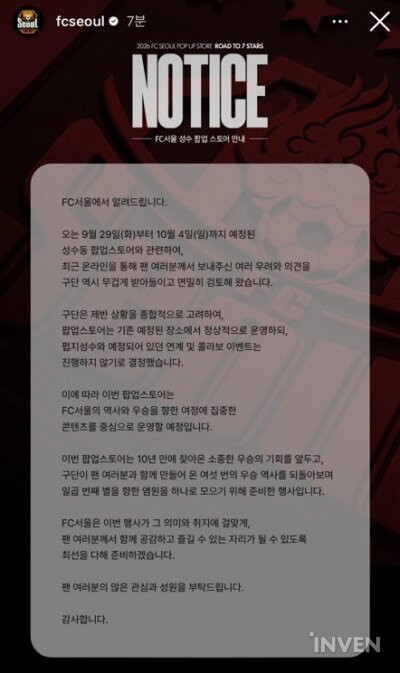
FC Seoul ends its PUBG collab after the Asia Stars scandal
Image: Inven Global
Krafton's investigation (9/23) confirmed that Vietnamese players Himass and TanVuu used rivals' live streams to make in-match decisions at PUBG Asia Stars 2026. The punishment was heavy: a permanent account ban and ban from official tournaments, plus a public apology to Korean streamer Soopi. (Inven Global, 9/26)
Punishing the guilty did not hold the partners. The Kkanbu Chicken chain suspended PUBG-related promotions on 9/20, clothing brand NOGEAR suspended its sponsorship, and on 9/26 FC Seoul, one of the K-League's most traditional clubs, announced it would not go ahead with the joint events planned for the PUBG Seongsu pop-up (9/29 to 10/4). The pop-up stays on site, but with no Krafton activation. (Inven Global / Esport Pulse, 9/27)
The detail is in the language. The first partners spoke of a temporary "suspension" until they could review the publisher's measures. FC Seoul said "we decided not to proceed", and did so after the sanctions were already out. For the football club, the punishment Krafton announced was not enough reason to keep the collab.
The first partners spoke of a "suspension". FC Seoul said "we decided not to proceed", with the sanctions already published.
🐔 Kkanbu Chicken suspended promotions tied to PUBG on 9/20, the first partner out
👕 NOGEAR suspended its sponsorship; FC Seoul exited the Seongsu pop-up events on 9/26
🏟️ The pop-up stays up through 10/4, with no Krafton activation on site
⚖️ Himass and TanVuu permanently banned from account and official tournaments for stream sniping
An integrity failure became a brand liability for the publisher, not the offenders. It is the risk the industry discusses in the other direction (an org losing sponsors over player behavior) applied to the owner of the product. The message for anyone evaluating sponsorship: due diligence now has to cover the integrity governance of the whole ecosystem, and an exit clause for third-party scandal is no longer a cautious lawyer's hypothetical. And the exodus happened in Korea, on Krafton's home turf, which raises the reputational cost.
Sources: Inven Global · Esport Pulse
Pusulabet doubled down: two CS2 teams carrying the same name
Pusulabet puts its name on two CS2 teams
Image: iGaming News Today / Pusulabet
The iGaming News Today analysis (9/26) marks the escalation: with the "NRG Pusulabet" branding going live in October, the Curaçao-based bookmaker focused on the Turkish audience will have two CS2 teams carrying its name: 9INE Pusulabet (active since Jul/2025) and NRG Pusulabet, both under contract through January 2028. (iGaming News Today)
Instead of buying a jersey logo or a stream overlay, the strategy targets the highest-visibility asset in sponsorship: the name that shows up in every match listing, broadcast graphic and result post. Activation goes beyond naming, with joint work on FACEIT, dedicated Twitch broadcasts and in-game integrations in CS2.
The package does not stop at the server. Pusulabet closed two-year deals with Fulham (Premier League) and Torino (Serie A), signed Mario Jardel and André Santos as ambassadors and runs a collaboration with Fabrizio Romano, betting on the audience's migration to digital natives. (SiGMA) And there is a structural detail: NRG was sold to DarkZero in Dec/2025 and the sponsorships, including Pusulabet's, survived the asset sale. (Esports Advocate)
Naming rights across two teams in the same game is a performance hedge built into a media buy.
🎰 9INE Pusulabet since Jul/2025 and NRG Pusulabet from October, both through Jan/2028
📛 Naming buys the team's name, present in match listings, broadcasts and result posts
⚽ Package beyond CS2: Fulham, Torino, ambassadors Mario Jardel and André Santos, collab with Fabrizio Romano
🔄 The sponsorship survived NRG's sale to DarkZero in Dec/2025
Competitive form in CS2 is volatile, and splitting the naming across two orgs smooths exposure to a bad cycle while building recognition over years, not seasons. It is the same argument that ran through r/esports this week, when the community debated whether the sector survives without betting money: betting money does not just buy a logo, it subsidizes operations. For orgs and TOs, a multi-year package in the same title becomes a new negotiating benchmark. For brands outside the category, the alert is different: the most lucrative sponsorship inventory is being consolidated by betting operators.
Sources: iGaming News Today · SiGMA · Esports Advocate
Fortnite champions without touching the mouse: the "by" that won a world title
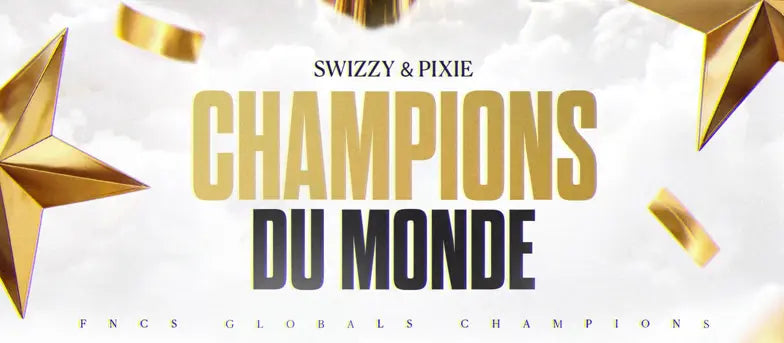
HavoK by Vitality, Fortnite Global Championship 2026 winner
Image: Team Vitality
The duo SwizzY and Pixie won the Fortnite Global Championship 2026 on Sunday (9/28), at Antwerp's Lotto Arena, after 12 matches, competing under the name "HavoK by Vitality". It is the first title of the partnership in which HavoK's Fortnite operation competes under the French organization's brand. (Team Vitality, official, 9/28)
The model is brand extension, the "X by Y" format: the big org enters a title without building its own operation, and the smaller operation gets distribution, sponsors and tier-1 brand credibility in return. Nobody bought anybody, and Vitality did not build a roster. A world title in the very first season turns the arrangement from a bet into a case.
The timing helps tell the story. One week before the trophy, TF1 Licensing announced Vitality as its first esports license, covered in the pilot series. The French brand is monetizing on both ends: licensed to a broadcaster and lent to a world-champion operation.
Vitality won a world championship in a title where it does not run the roster. The "by" did the work.
🏆 SwizzY and Pixie champions of the Fortnite Global Championship 2026 after 12 matches in Antwerp
🤝 "HavoK by Vitality": HavoK's operation competing under the Vitality brand, which does not run the roster
📅 One week after TF1, the Vitality brand lifts a trophy in a game it does not operate
🧩 "X by Y" model: org enters a title with no operation of its own; smaller operation gets distribution and credibility
For publishers and TOs, the title is an argument for structuring slots as brand franchises. For marketers, it proves the org's equity transfers to products it does not operate, exactly the thesis the TF1/Vitality licensing wants to build. An org's brand is no longer just a jersey print: it became a platform that pays where the operation cannot reach.
Source: Team Vitality
Gamers Club translator
"X by Y": how Vitality won a Fortnite world title without operating the team
"HavoK by Vitality" may look like a sponsor name on a match listing. It is something else: a business model the world outside esports calls brand extension, where an operation competes under a bigger brand's name and each side takes something different from the arrangement.
The mechanics resemble hotel chains. Hilton neither owns nor operates every hotel flying its flag: many belong to local groups that pay for the right to use the name, the standards, the sales channel and the credibility. The same logic applies in esports. HavoK runs the Fortnite operation, the players, the staff, the day to day. Vitality lends equity: a tier-1 name that opens sponsor doors, distribution and the respect it would take HavoK years to build. In return, Vitality enters a game without building an operation from scratch.
The arrangement is distinct from its two closest neighbors. In an acquisition, someone buys someone and takes over the operation; here nobody bought anybody, and Vitality does not touch the roster. In a sponsorship, a brand buys space on the jersey and the broadcast; here its name becomes the team's competitive identity.
Vitality lifted a world championship trophy in a game where it does not operate the team.
The case came fast. On Sunday (9/28), the duo SwizzY and Pixie won the Fortnite Global Championship 2026 at Antwerp's Lotto Arena, after 12 matches, competing as "HavoK by Vitality". It is the partnership's first season. One week earlier, TF1 Licensing, an arm of France's biggest broadcaster, had announced Vitality as its first esports license, debuting with an activation for BYD.
A world title in the debut season turns a bet into proof of concept: the org's equity transfers to a product it does not operate. It is the same argument the TF1 deal wants to sell, now with a trophy to show. For publishers and organizers, the case points to a way of structuring slots as brand franchises. For Vitality, the brand has become a platform that pays where the operation cannot reach: licensed to a broadcaster on one end, lent to a champion operation on the other.
Sources: Team Vitality, HavoK by Vitality title · Gaming Newsroom, TF1 x Vitality
Exclusive GC data
56.5%
2,391 of 4,234 gamers said they remembered seeing ads, promotions or logos from peripheral brands sponsoring esports teams, tournaments, streamers, casters or GC itself. Recall holds steady across all age brackets, between 52% and 57%: not hardcore-niche memory, it registers at mass scale.
And remembered sponsorship becomes association: among the 2,391 who recall seeing brands in the scene, 100% name at least one that "fits and helps develop Brazilian esports"; the most cited concentrates 39.6% of the choices. For the media buyer, the message is direct: in the gaming audience, sponsorship does not just show up, it sticks to the brand.
Source: GC Brand Impression Survey, Peripherals (Wave 1), 4,234 responses, collected Jan 30 to Feb 2, 2026
Gamers Club take
The week separated who buys memory from who loses it. Thibaut Courtois joined the cap table of Fusion Esports Group, the owner of Astralis, because a Real Madrid goalkeeper looks at an org that nearly collapsed in 2025 and sees a community asset, not a vanity expense. On the other side, Krafton handed permanent bans to the PUBG Asia Stars cheaters and lost partners anyway: FC Seoul "decided not to proceed" after the sanctions were already out. Punishing the guilty does not give sponsors their trust back. In the middle of the table, Pusulabet put its own name on two CS2 teams through January 2028, buying the only inventory that never leaves the screen, and Vitality lifted a Fortnite world title with an operation that is not even its own, proving that an org's brand has become a licensable platform.
This edition's exclusive data point measures the end that matters to buyers: 56.5% of gamers said they remembered seeing peripheral brands sponsoring esports teams, tournaments or streamers (2,391 of 4,234 respondents, an unpublished GC base). Recall holds between 52% and 57% across all age brackets. And remembered sponsorship becomes association: asked which brand best fits the scene and can help develop Brazilian esports, all 2,391 named one, and the most cited, LogitechG, concentrated 39.6% of the choices. With the method caveat: it is assisted recall, measured on the platform's engaged base. Even so, the signal is clear: in the gaming audience, sponsorship does not just show up, it sticks to the brand.
Good sponsorship is the one that stays in memory for the right reason.
That is the read on the whole week. The team's name is the inventory that remains when the banner is gone, which is exactly why betting money buys it on multi-year contracts. The same memory that makes the right brand stick also records a breach of trust: FC Seoul will remember Krafton, and not for the reason the publisher wanted. GC's position: good sponsorship is the one that stays in memory for the right reason. That is why we design sponsored championships and in-game media as presence inside the match, registered by the audience as part of the scene and not as noise, and measure the result with first-party data on what 3 million users remember. Whoever buys impressions pays for what passes; whoever enters the game keeps what stays.
Sources: Insider Gaming, Courtois joins Fusion · Inven Global, Krafton partner exodus · iGaming News Today, Pusulabet naming rights · Team Vitality, HavoK by Vitality title · GC Brand Impression Survey, Peripherals (Wave 1), 4,234 responses, collected Jan 30 to Feb 2, 2026

Trust was the asset under negotiation all week. The investor arrived because he believes in Astralis' recovery. The partner left because punishing the offenders was not enough. The bookmaker paid for the name that shows up in every match listing. And Vitality showed that the brand, by itself, already lifts trophies.

This edition's data point explains why that asset is priced the way it is: 56.5% of gamers remember seeing peripheral brands sponsoring esports. When more than half the audience retains whoever showed up in the scene, sponsorship stops being exposure and becomes a record that works for the brand. That is what the week negotiated in every direction.

If this edition helped you look at esports spend differently, forward Minimap to someone who also decides where it works.

Until the next round.

Issue poll
Do you remember seeing any peripheral brand sponsoring esports teams, tournaments or streamers?
Yes   No